
Consumer goods firms and auto companies are witnessing an upturn in rural demand, which had been lagging for most of FY24. Expectations of a bumper rabi crop harvest have helped turn the tide. The Reserve Bank of India's (RBI's) Monetary Policy Committee kept the repo rate unchanged last week, noting that as rural demand catches up, consumption is expected to support economic growth in 2024-25.

Except for March, when BMW recorded unusually high sales, Mercedes sales were ahead in the other months.

The Jazz, coming at a price range of Rs 6,98,000 to Rs 7,33,000 (ex-showroom Delhi), had witnessed stock pile up last month with retail sales not picking up.
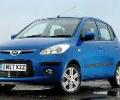
Car sales rose 67 per cent in November, the highest since February 2004, and many in the industry haven't stopped partying since this number was announced by the Society of Indian Automobile Manufacturers.

Amid better semiconductor chip supplies, the Indian automotive industry posted an 8 percent growth in production of vehicles across categories for the month of May, with three-wheelers (20 per cent) and passenger vehicles (16 per cent) leading the pack. Exports, however, dipped 21 per cent at an industry level. The industry also recorded its highest-ever May wholesales of domestic passenger vehicles (334,802 units), riding on high demand for sport utility vehicles (SUVs) and better supplies of semiconductor chips.

Domestic passenger car sales declined by 4.36 per cent in August to 94,584 units from 98,893 units in the same month last year.
The Tatas sold over 14,466 Indica cars, which was slightly lower than the sales of 14,592 units of the Santro hatchback in January.
Since Hyundai has developed its 'small cars' based on the current definition of 4,000 mm, it could lose out on excise benefit if the length were to be altered to 3,800 mm as per the auto policy.

Even as India overtakes Japan in automotive sales in 2022, moving to third place for the first time, oddly enough the country's biggest motor show is going to see some big hitters give it a clear miss. Some prominent automotive brands have cited high event costs, negligible returns on investment, poor event management, and unfavourable location as reasons for their reluctance to participate. Major pure-play electric two-wheelers, too, are riding past this year's edition of the Auto Expo.

With 15% customs duty hike on locally assembled vehicles, it is cheaper to import from Thailand, says India MD
Driven by Hyundai Motors, exports of passenger cars from India jumped 28 per cent to 1,60,677 units in the financial year ended March 31, 2005.\n

The muted expectation of dealers come at a time when vehicle manufacturers such as Maruti Suzuki, Hyundai Motor, Mahindra & Mahindra and others reported a double-digit fall in wholesale dispatches to dealerships in July and August.
Passenger car sales fell 0.89 per cent in the domestic market in June, the second time in the last six months, to 64,464 units from 65,046 units in the same month last year.

The next edition of the country's leading automobile show, the Auto Expo, will be held from January 13-18 next year, having been cancelled this year due to the COVID-19 pandemic. The last edition of the biennial automobile show took place in February 2020 amid fears of the spread of the coronavirus across the world. It was supposed to take place in February this year at Greater Noida but was postponed due to the worsening COVID-19 situation.
Bouyed by higher sales in the festive season, domestic passenger car and motorcycle sales witnessed a healthy growth in November, going up by 21.16% and 27.08%

Higher exports will also drive up volumes, as the company seeks to avail of the benefits under the government's recently announced production linked incentive scheme.
Driven by the top three carmakers -- Maruti, Hyundai and Tata Motors -- the car sales surged by 25 per cent in June 2004 over the same month last year.
Exports of Made in India vehicles went up by a whopping 56 per cent during the last fiscal as cars, commercial vehicles and two-wheelers continued to charm overseas buyers.

The number of Indians over 15 either working or looking for work is lower as a percentage than in the United States, China, Bangladesh or Pakistan, points out Aakar Patel.
Domestic passenger car sales jumped 28 per cent in April to 42,506 units from 33,195 units in the same month last year, the Society of Indian Automobile Manufacturers said on Wednesday.\n\n\n\n

The local arm of the Japanese two-wheeler manufacturer accounts for every second scooter sold in India.
India's domestic passenger car sales rose 7.64 per cent in November, slowing after three months of double-digit growth as buyers postponed year-end purchases to the next year to boost resale values.

Jimny will be priced between Rs 12.7 lakh and Rs 15.05 lakh.

The move to implement a proposal of star ratings on passenger vehicles, similar to those seen on electrical appliances, is likely to be delayed by several months. Stakeholders from the automobile sector and the government are divided over key facets.

The economy segment of India's car market is unlikely to revive soon term as inflation and prices prompt buyers to defer purchases. The share of entry-level cars in the passenger vehicle market dropped to the lowest in seven years at the end of the Financial Year 2021-22 (FY22). A recovery in the segment will be largely driven by the overall economic growth, improvement in income levels, and easing of semiconductor shortage, say carmakers and analysts.

Exports in October and November fell 28 per cent and 17 per cent, respectively.

As per SIAM data, vehicle sales across categories, including passenger vehicles and two-wheelers and commercial vehicles stood at 18,21,490 units last month as against 23,82,436 units in August 2018, a fall of 23.55 per cent.
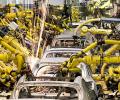
Indian automobile units are employing more and more robots to improve your car's efficiency. India is catching up well as world over, the latest technologies is redefining outdated manufacturing processes.

Passenger vehicle wholesales in India rose significantly year-on-year in July, as COVID-led restrictions eased across states and companies pushed stocks to dealers to build up inventories for the upcoming festive season, SIAM said on Thursday. The total passenger vehicle sales -- including dispatches of cars, utility vehicles and vans -- from OEMs to dealerships increased by 45 per cent to 264,442 units in July against 182,779 units in the same month last year. According to the latest data by the Society of Indian Automobile Manufacturers (SIAM), two-wheeler dispatches from the OEMs to dealerships, however, declined by 2 per cent to 12,53,937 units in July, compared to 12,81,354 units in the year-ago period.

As India is progressing towards Bharat Stage IV (BSIV) emission norms, most cars still run under BSIII standard.

7 Maruti models among top 10 best selling passenger vehicles in April

Apart from around 40 Japanese companies and five global vendors of MG Motor India, many other biggies are eyeing Gujarat for either greenfield opportunities or brownfield expansion.

The luxury car market leader will be producing the new-generation cars, sedans, SUVs, and AMG performance cars at one facility.

Durable, automobile and real estate players have been lobbying hard for a tax cut, saying it will boost demand.

Maruti Suzuki India Limited (MSIL), the country's largest car maker, has initiated a service campaign to inspect a probable fault and replace a part of the clutch operation system in the Ciaz, its mid-size sedan.

An average of 30-40 per cent automation is standard across all big automobile plants in the country

Maruti Suzuki India continued its grip in the passenger vehicles market in India with five of its models in the top ten best selling models in June.

 © 2026 Rediff.com - Advertise with us - Disclaimer - Privacy Policy - Sitemap - Feedback - About us - Terms of use - Grievances